Project Gaitway
LinkedIn Showcase
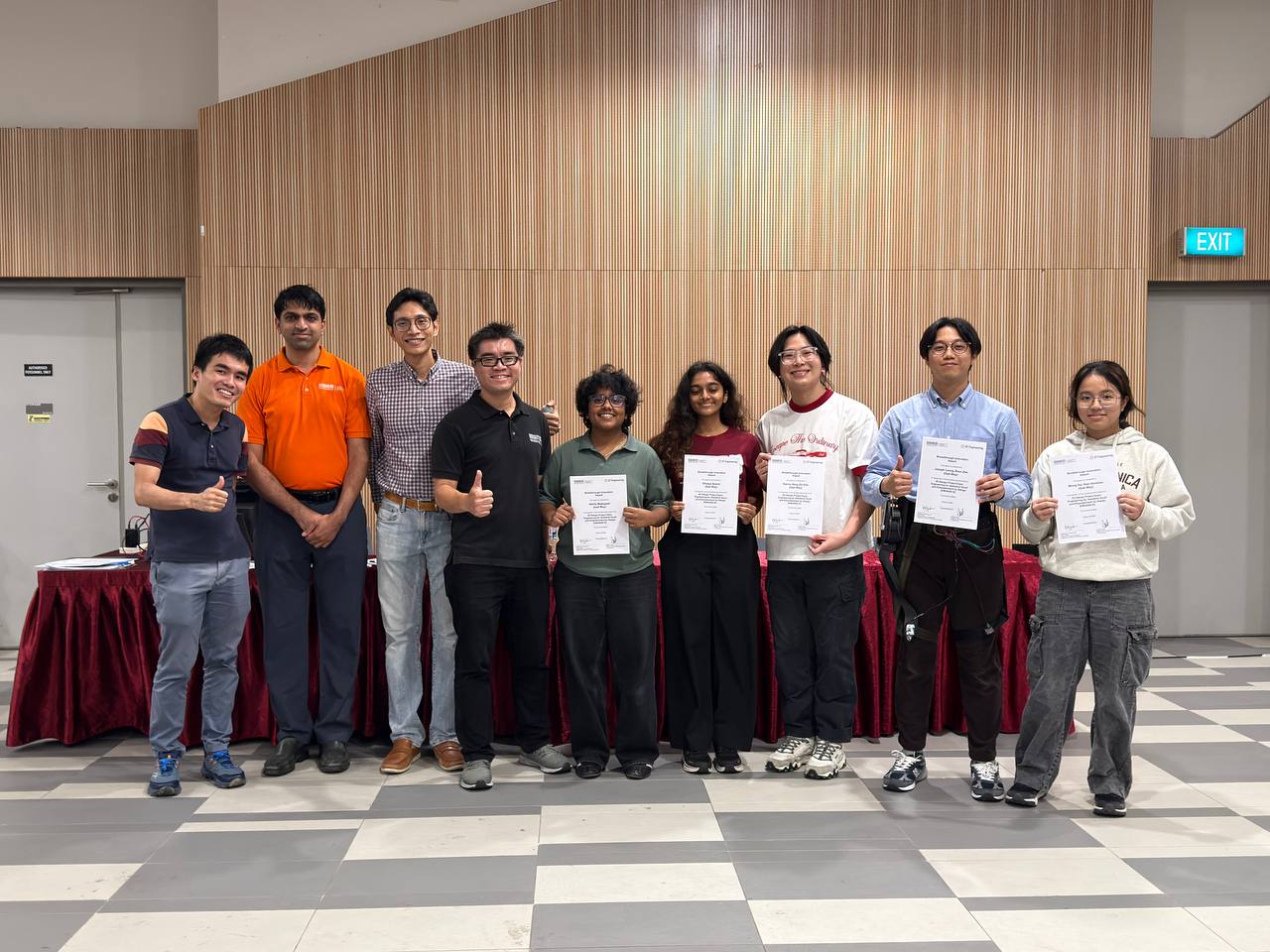
Project Gaitway was publicly showcased after the final presentation and engineering demo.
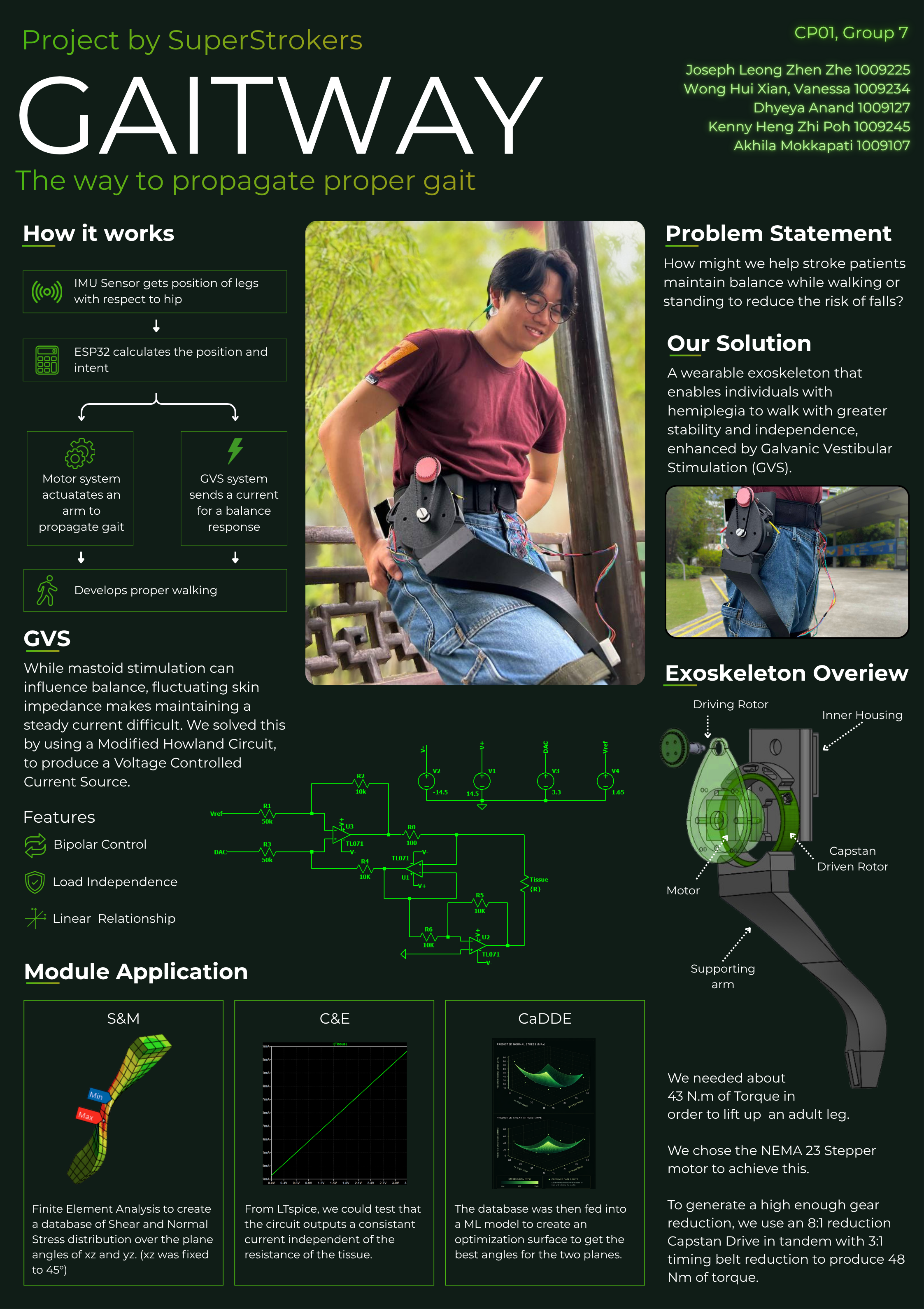
View LinkedIn Post →Project Gaitway is a wearable assistive exoskeleton system designed to help stroke patients improve mobility, gait propagation, and balance while reducing the risk of falls.
The project combines both physical and neurological rehabilitation methods through a modular exoskeleton platform integrating real-time sensing, motorized gait assistance, and Galvanic Vestibular Stimulation (GVS).
Developed within approximately 5 weeks under SUTD’s Engineering for Good programme, the prototype was later awarded Top Course Project during the final showcase.
The project consists of three integrated subsystems working together as a single assistive platform:
- Sensor + Control System
- Motor / Mechanical Exoskeleton System
- Galvanic Vestibular Stimulation (GVS) System
The sensing architecture uses BNO055 IMUs mounted on the waist and legs to estimate gait movement, body orientation, and instability in real time.
ESP32 microcontrollers were used for sensor reading, gait phase detection, subsystem communication, motor triggering, and balance correction logic.
The gait detection pipeline used movement thresholds, pitch-rate calculations, and orientation comparisons between multiple IMUs to identify walking states and instability conditions.
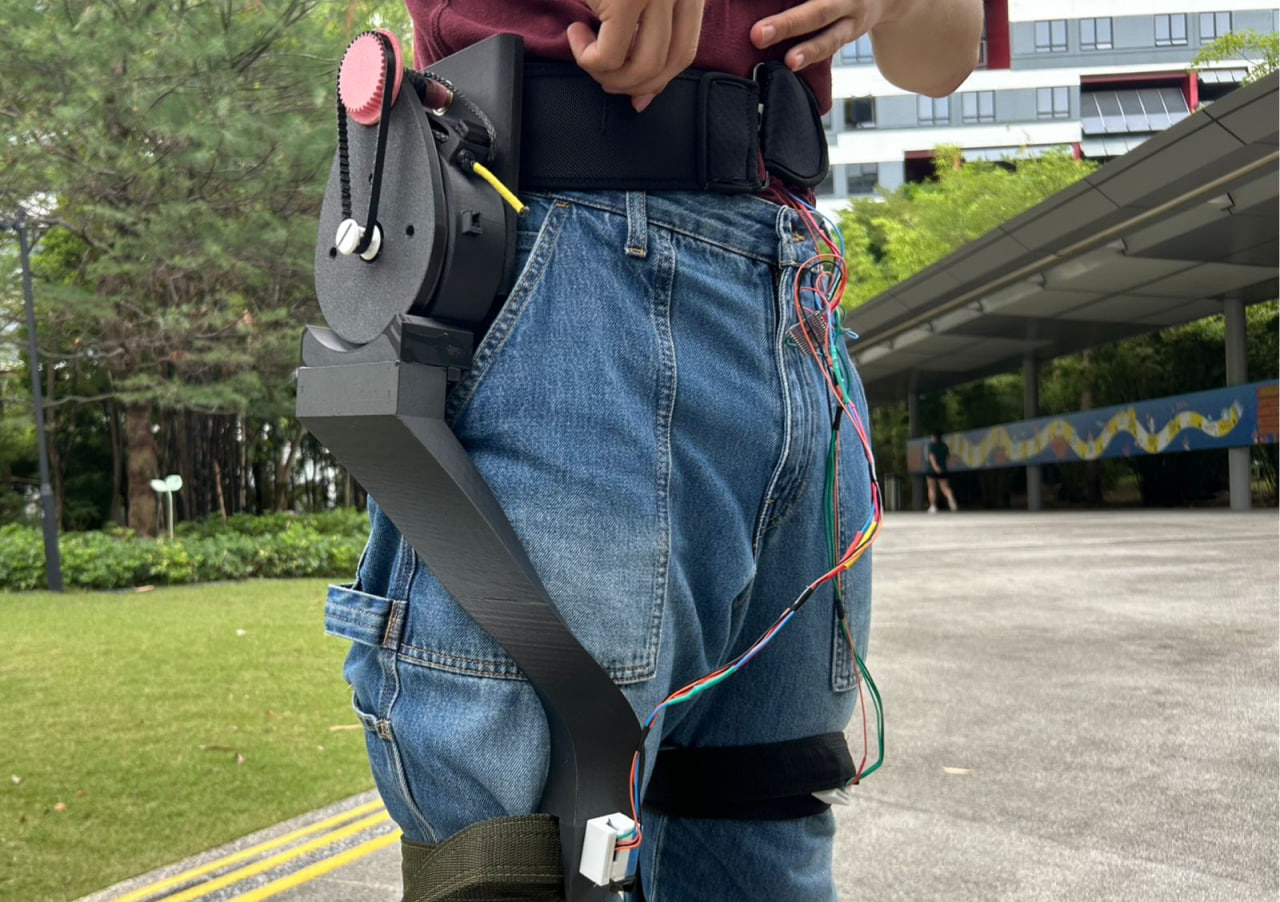
The exoskeleton subsystem focused on smoother gait propagation, biomechanical alignment, and wearable modularity.
- NEMA 23 stepper motors
- Capstan drive systems
- Belt-driven transmission
- Gear reduction systems
A capstan-based design approach was selected to reduce backlash, preserve torque, improve smoothness, and remain manufacturable within budget constraints.
The project also explored Galvanic Vestibular Stimulation (GVS) for neurological balance correction.
Using body tilt data from IMUs, the system could trigger controlled vestibular stimulation to assist with balance correction during walking.
- Modified Howland Current Pump architecture
- Bipolar stimulation control
- Stable current regulation
- Real-time left/right balance correction triggering
- Embedded systems
- ESP32 development
- Sensor fusion
- Motor control systems
- IMU sensing
- UART + I2C communication
- Hardware-software integration
- Wearable robotics
- Rehabilitation engineering
- Rapid prototyping
The long-term goal of Project Gaitway is to create a modular, affordable, and clinically useful rehabilitation platform that helps stroke patients regain mobility, balance, confidence, and independence in everyday life.